



Night drops, and the air turns mean—the kind of cold that gets under your layers and kills the vibe on an off-grid evening. For families running on solar, that moment when the battery bank starts to dip feels like you’re racing the clock. Will the heat stick around?
What’s really going on under the hood
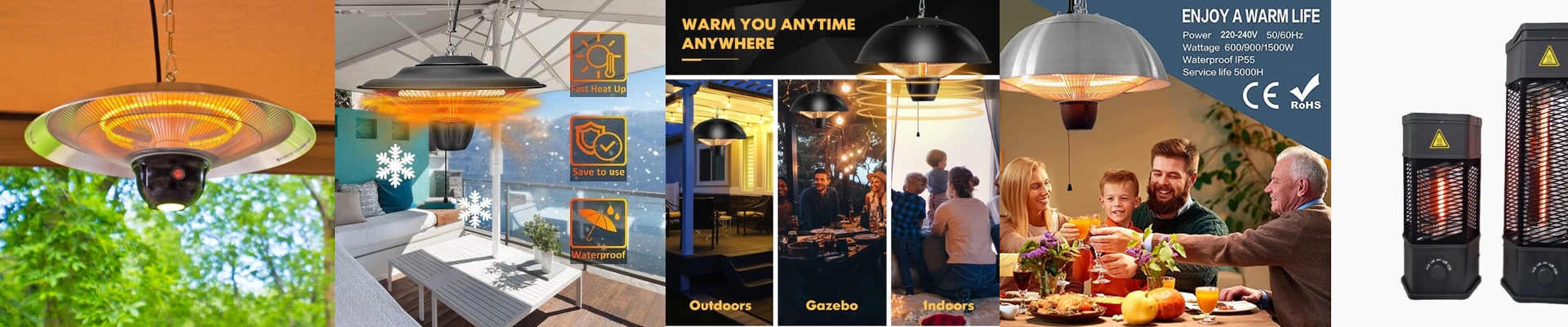
We built this camping electric heater around a carbon fiber infrared element. Convection heaters warm air and lose energy fast; this one throws radiant heat that goes straight to people and objects. You get an 800–1200W electric heater that feels toasty the instant it’s on, even when the air around it is dead still. It runs off standard 120V shore power, and for off-grid life, it can be paired with an inverter and a solar battery bank. Infrared heat is efficient because it targets the occupants, not the empty space.
Why it fits the off-grid setup
Hooked up to a solar photovoltaic system, this infrared heater leans right into energy independence. In a 12–15㎡ off-grid cabin, a 1000W unit can keep a comfortable background warmth for 3–4 hours on roughly 3 kWh of stored energy. That draw is manageable for many home battery systems, especially compared with older halogen patio heaters that pull heavy current. You get warmth without the panic of watching the battery percentage fall. And because the comfort hits immediately, you don’t have to oversize the system—heat on demand, and the solar bank recharges during the day.
The details that matter
This isn’t plug-and-play in every tent or shed. The heater needs a stable 120V supply, so your inverter has to handle the starting surge, and the wiring should be sized for continuous use. On the safety side, look for tip-over protection and an IP rating that’s appropriate for sheltered outdoor use. Infrared warmth is directional, too.Point the heater so it shines on the seating area, and you’ll feel the difference right away.