


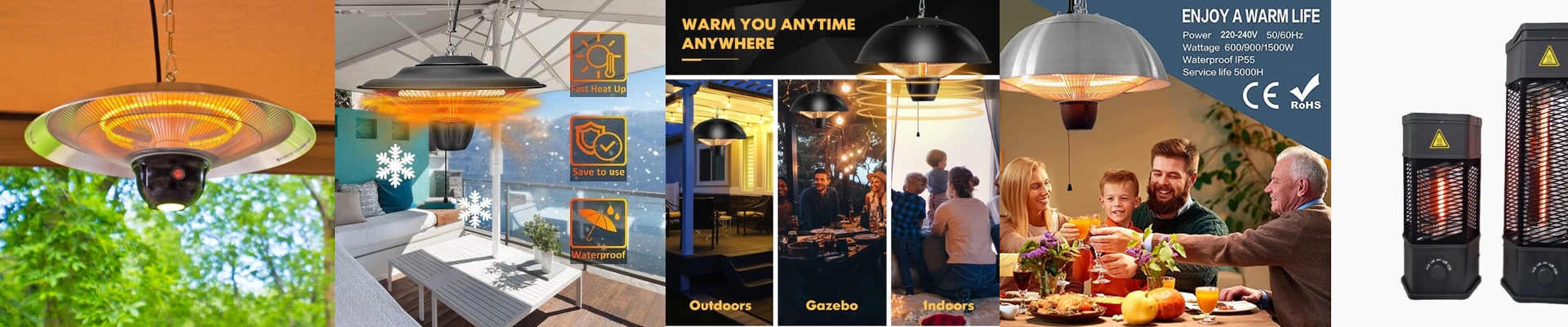


A cold desk turns focus into a slow fight against discomfort. Fingers stiffen, shoulders hike up, and the afternoon becomes a tug-of-war with a draft you can’t pin down. We built our CE-certified infrared personal heater to break that loop—by putting warmth right where you need it, without wasting energy heating the whole room.
What matters under the hood
This unit uses near-infrared radiant heat from a tough quartz element. Heat hits almost immediately—no long warm-up, no noisy fan churning air around. It runs on a standard 120V outlet, pulls a modest 400–600W, and the footprint is small enough to live on your work surface without taking over. A tip-over switch cuts power if the heater gets knocked over, and the CE mark means the design has been assessed against recognized European safety requirements.
Why this approach works at a desk
Comfort here isn’t just about the number on the thermostat—it’s about staying in the zone. Infrared warmth targets your hands, wrists, and torso, so your typing stays steady and your posture stays relaxed. Because the heat is directional, you’re not paying to warm empty space. That can keep running costs lower than many whole-room electric heaters. Home bloggers like it for another practical reason: it stays quiet, so filming, calls, and creative work don’t get drowned out.
Things to keep straight
Radiant heat delivers comfort fast, but remember—it warms people and surfaces directly, not the air. In very dry indoor conditions, any electric heater can reduce humidity a bit. If the air feels too parched, keep a small glass of water nearby. Set the heater on a stable, level spot within arm’s reach, and keep it clear of papers and cords. It’s designed for personal use; if you’re trying to heat a larger room or the whole space, you’ll want to pair it with a room thermostat or a different heating plan.