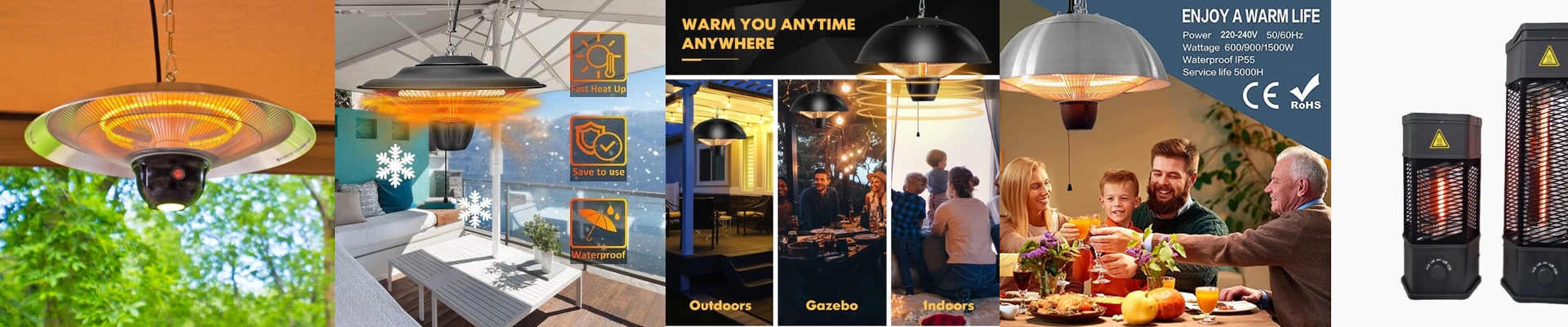



Keeping Things Safe: The Reality of Bathroom Infrared Heaters
Putting an infrared heater in a bathroom is a bit of a gamble if you don’t do it right. You’ve got steam everywhere and water splashing around. In a place like that, electrical insulation isn’t just a “best practice”—it’s the only thing keeping you safe. When we aim for an IP44 rating, we’re basically trying to make sure the guts of the machine stay dry and untouched.
What IP44 Actually Means for You
In plain English, IP44 means two things: nothing bigger than 1mm gets inside, and water splashes from any angle won’t ruin your day. The real trouble spots are usually where the cables enter the unit and where the lamps plug in. That’s where things leak. We use compression glands and silicone gaskets to plug those holes tight. Why? Because if moisture sneaks in, it creates a path for electricity to go where it shouldn’t. That’s how you get a short circuit or a nasty ground fault.
Making Sure You’re Not the Conductor
The goal is simple: the person touching the heater should never feel a thing. We keep the heating element completely separate from the outer shell. To do that, we use ceramic insulators and special high-temp polymers. These materials are tough; they don’t warp or crumble even when they’re heating up and cooling down a hundred times a day. We also tuck the wiring into insulated conduits so the heat doesn’t melt the plastic jackets. We don’t just hope it works, either. We test for “leakage current.” Even a tiny bit of electricity—just a few milliamps—can be dangerous when you’re wet. We set up the grounding so that if something does go wrong, the breaker trips instantly.
The Tug-of-War: Heat vs. Water
Here’s the tricky part. Waterproofing and cooling are basically enemies. If you seal a housing too tight to keep the water out, you trap the heat inside. If that happens, the electronics can cook themselves. It’s a balancing act. You have to figure out how to keep the water out without turning the inside of the unit into an oven. If you’re using high-wattage shortwave tubes, you’ve got to be extra careful with your ventilation. Make sure there’s enough breathing room for the heat to escape, or you’re just building a very expensive toaster.