


High Ceiling Infrared Heaters: The Fast Fix for Big, Cold Spaces
Let’s talk about those huge spaces that feel like iceboxes. You know the ones—sprawling workshops, massive warehouses, locker rooms with ceilings so high you need a ladder just to look up. Forced air just gives up in places like that. It’s all hot air and no warmth where you actually need it. That’s where these high-ceiling infrared heaters come in. They’re built for one job: turning a frozen zone into a comfortable, steady spot in seconds, not hours.
The Power Behind the Warmth
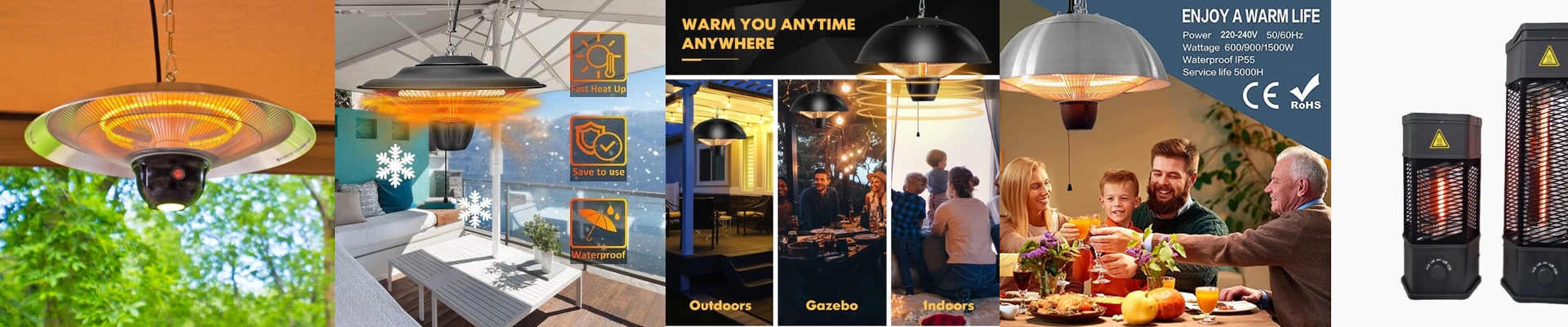
Here’s the thing about these heaters: they’re small, but they punch way above their weight. We’re talking a compact tube, around 300mm long, that can crank out up to 2500W of heat. That kind of concentrated power is exactly what it takes to send infrared warmth across a long drop and still have it land with real impact on the floor and at human level. When it comes to voltage, we match the heater to the building. Many units run on 400V. It’s a smart move because higher voltage means lower amperage, which keeps the wiring manageable over long runs and prevents voltage drop. But with that kind of output, you have to plan for the heat. The housing and mounting hardware get seriously hot, so proper clearances and heat-resistant wiring aren’t optional—they’re essential.
What’s Inside: The Details That Matter
Inside the heater, you’ve got a halogen-filled quartz tube doing the heavy lifting. The halogen chemistry keeps the filament clean and stable, which means the heat output stays consistent over the life of the tube. And the quartz itself? It’s tough enough to handle the extreme temperatures and the shock of turning on and off again, again and again. For the connections, most tubes use an R7s connector. It’s a simple, proven design that carries both line and neutral across the ceramic caps, making the lamp a straightforward drop-in replacement. For spots where things shake—like near heavy machinery—we sometimes use an SK15 connector. It locks in place, so you don’t have to worry about vibration loosening the connection over time. And that reflective coating on the back half of the tube? It’s not just for show. It directs all that infrared energy forward, so you’re not wasting heat on the mounting bracket.
Why It Works Where Others Fail
Think about a high-ceiling change room. You need warmth right there, where people are standing and sitting, not way up in the rafters. Infrared heat travels at the speed of light, hitting people and objects directly. The air in between? It doesn’t matter. You feel the warmth almost instantly on the floor and at the benches, even if the air above is still chilly. These heaters are built for the real world. They’re compact, so they fit into tight spots, and the wiring is straightforward. Just remember, you’re dealing with serious heat. Plan your mounting with enough space, protect nearby materials, and make sure your wiring is up to the task.