


Getting IR Heating Right for Silk-Screened Train Glass
Here is the struggle when you’re trying to silk-screen and temper train windows in one go: you’re basically fighting physics. You need enough heat to make the glass safe and stress-relieved. But if you push too hard—or use the wrong kind of heat—you’ll fry the ink or watch your crisp lines start to bleed. It’s a delicate balance. We handle this by using targeted shortwave infrared (IR) heating.
Keeping the Patterns Sharp
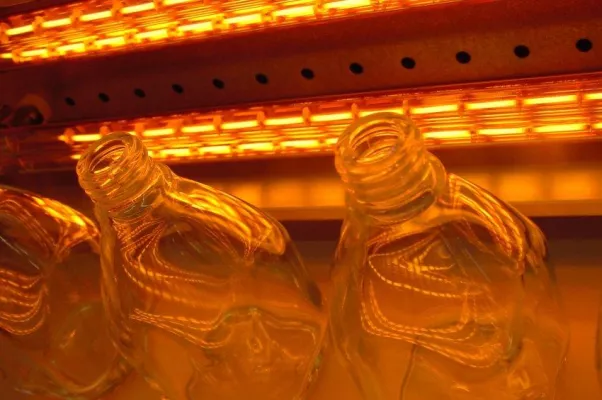
The trick is to hit that glass transition temperature without cooking the ink on the surface. Shortwave IR lamps are great because they punch right through the glass. This lets us heat the core of the material quickly. Because it happens so fast, the ink doesn’t spend much time sitting at a dangerous temperature. Compare that to longwave heat, where the surface just simmers. That’s how you get blurred patterns and degraded ink. Not a good look. We spend a lot of time tweaking the wattage and how the lamps are spaced. We want a uniform heat map across the whole window. No “hot spots,” no distorted prints, and no uneven tempering.
The Gear That Makes it Work
To get the speed we need, we use high-density quartz halogen tubes. These things are powerful. They can get glass up to tempering temps in a matter of seconds. But you can’t just plug them in and hope for the best. You need a control system that reacts instantly. Think about it: if your belt slows down even a little and that glass lingers under the lamps, your screen print is toast.Timing is everything.
Power vs. Cooling (The Real Headache)
When you cram that much power into a small space, things get hot. Really hot. The shortwave energy goes into the glass, sure, but the lamp housings and reflectors still take a beating. This is where a lot of people mess up—they ignore the cooling. If your exhaust fans aren’t strong enough to pull the heat away from the lamp ends, your connectors will oxidize and just burn out. It’s that simple. If you want your lamps to actually last while running at full tilt, you’ve got to get the airflow right.