



Why Your Bathroom Heater Actually Works
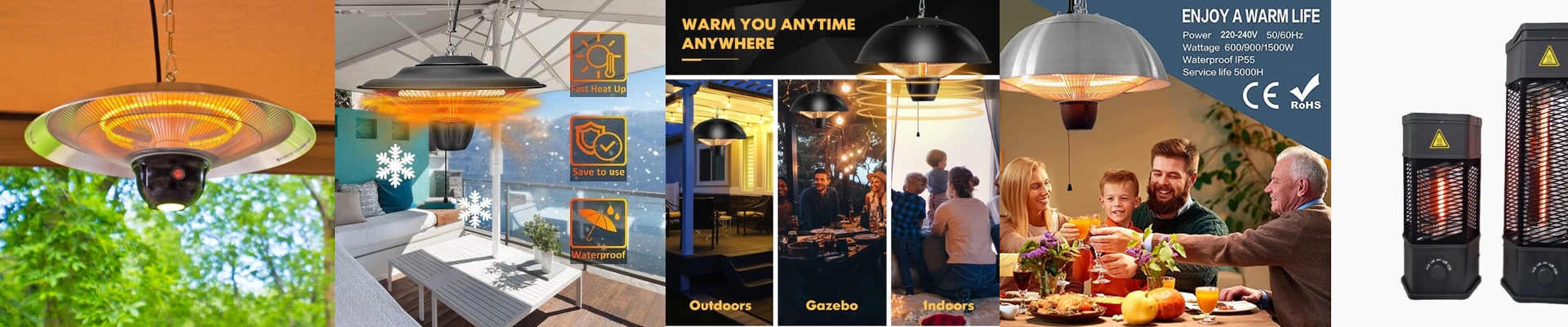
Most bathroom heaters are a waste of time. They spend forever trying to warm up the air, and by the time the room feels “warm,” you’ve already finished your shower and you’re shivering again. We do things differently. We use short-wave infrared (IR) emitters. Instead of fighting with the air, these units beam heat directly onto your skin and the surfaces around you. It’s the difference between waiting for a room to warm up and stepping into a patch of sunlight on a winter day. You feel it in seconds. The secret to that instant heat We use high-wattage quartz halogen tubes. If you’ve ever used a standard convection heater, you know that slow, creeping warmth. IR doesn’t do that. The filament hits its peak temperature almost the moment you flip the switch. You get a massive burst of heat exactly where you need it, which means no more standing in a freezing changing area wondering why the heater isn’t working. The nerdy stuff (that actually matters) We don’t cut corners on the materials. We use high-purity quartz glass for the envelopes because it can handle the shock of going from ice-cold to scorching hot without cracking. Inside, there’s a halogen cycle at work. It basically pushes the tungsten back onto the wire so the filament doesn’t burn out after a few months. For the connections, we stick with R7s or Sk15 connectors. They’re rugged, heat-resistant, and they won’t melt when things get intense. We also often add a specialty coating to the quartz. This isn’t just for looks—it tweaks the light waves so your body absorbs the energy more efficiently. Getting it installed These units are small, so you can tuck them into almost any ceiling or wall mount without taking up much space. One thing to watch out for, though: these things put out a lot of concentrated heat. If you go with a wattage that’s too high for a tiny space, the fixture itself can get pretty hot. Just make sure your housing materials are rated for the temperature. You don’t want your ceiling panels warping or changing color because you went a bit overboard on the power.