
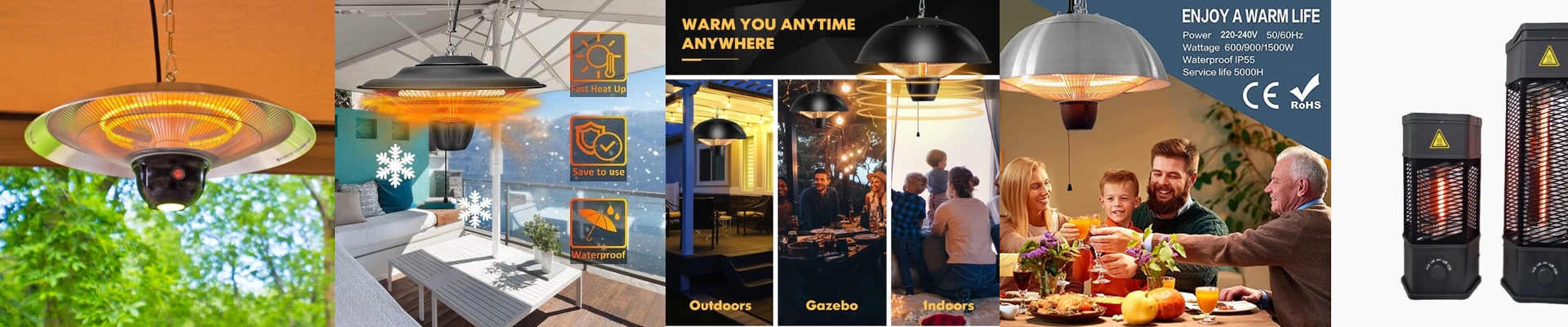


Why Explosion-Proof Quartz Tubes Are the Final Safety Line for Bathroom Heating
Let’s be honest—bathrooms are brutal on heaters. Steam, sudden temperature swings, and the sneaky risk of electrical arcs. That’s why we build our umbrella heaters for the real world, not some perfect showroom. The heart of our solution? An infrared lamp built around a true explosion-proof quartz tube. It’s not just a part. It’s the last physical wall standing between your family and trouble.
Power, Voltage, and Specs—Kept Real
We don’t chase marketing numbers. We chase reliability. The quartz tube runs on standard home voltage, so you get steady heat without pushing your wiring to the edge. And the size? It’s compact, made to slip into tight spots above showers and sinks. No need to rework the whole ceiling just to make it fit. The design is intentional. Shortwave infrared focuses on heating surfaces directly, instead of wasting energy warming air. The payoff? Quick warm-up, less heat lost to the room, and a more even feel across the bathing area.
The Material That Matters: Explosion-Proof Quartz and the R7s Connection
Here’s the star: the explosion-proof quartz tube. Quartz handles sudden heat shocks far better than regular glass. And because it’s thicker and reinforced, it contains pressure if the filament ever fails. In a bathroom, a standard tube can rupture and leave live parts exposed. Ours contains the failure, so the room stays safe. Then there’s the R7s connector. It’s the practical choice when you want industrial-grade reliability. Two solid contact points handle high current without working loose. Installation is straightforward—line up the pins, seat the tube, lock it in. You get a termination that holds up against vibration and repeated heating and cooling, which means fewer maintenance headaches.
What It Does for You: Safety, Efficiency, and a Clean Install
In an umbrella heater, the main job is simple: deliver warm air safely, right where you need it. The explosion-proof quartz tube cuts the risk of arc flash and flying debris—especially important when the unit sits directly over people. And because infrared warms people and surfaces first, the bathroom feels cozy faster, and wall condensation drops. There is a trade-off, and it’s a fair one. Concentrated shortwave output needs thoughtful placement and ventilation. If the heater sits too close to something flammable, heat can build. But plan the mounting height and airflow up front, and you get a system that runs cooler, lasts longer, and stays safe. We build these lamps to take a beating. Predictable heat output. Clean wiring with the R7s connection. And containment when something goes sideways. For engineers and installers, that translates to fewer callbacks and a heater that performs in the field—not just on paper.